Leicester slot arcade fined £150k for self-exclusion failures
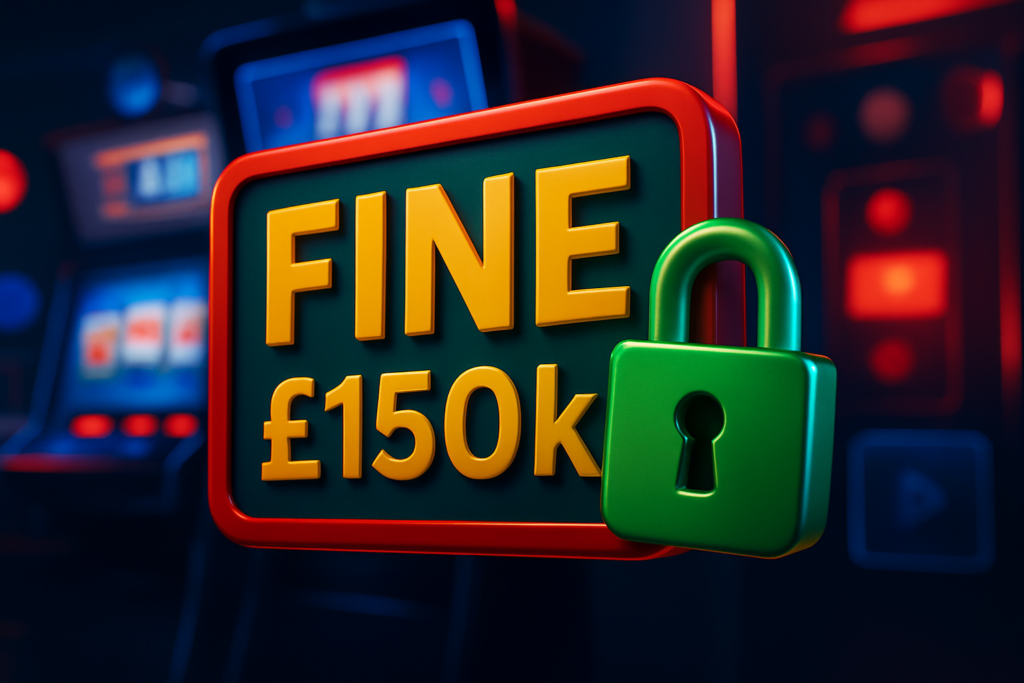
The Gambling Commission has fined Holland Park Leisure Limited, which runs three adult gaming centres in Leicester city centre, £150,000 for failing to give its customers a working self-exclusion route. The decision was recorded on 31 July 2026 and made public on 18 August, and it lands in the middle of a wider political row about the future of arcades and slot venues on Britain’s high streets.
What’s actually changed
The Commission recorded its decision on 31 July 2026 and imposed the penalty under section 121(1) of the Gambling Act 2005. The case centres on a breach of Social Responsibility Code Provision 3.5.6, which requires holders of gaming machine general operating licences for adult gaming centres, along with non-remote casino, bingo and betting licensees, to give customers who enter a self-exclusion agreement the ability to exclude themselves from the same kind of gambling offered locally by other licensees, meaning participation in at least one available multi-operator scheme.
Holland Park Leisure had been told about this obligation well before it was penalised. Despite being made aware of its obligation to participate in a multi-operator self-exclusion scheme, the operator did not do so until the Commission suspended its licence in October 2025. The regulator treated the delay harshly because of what happened in between: Holland Park Leisure had received prior warnings about its non-compliance yet took no remedial action, and the company also supplied misleading information during the regulator’s enquiries. Those factors, along with the fact that some compliance steps occurred only after the licence review started, were treated as significant aggravators when fixing the £150,000 penalty.
Beyond the fine, the operator faces ongoing scrutiny. Holland Park Leisure Limited will also undergo a third-party audit to review the Licensee’s policies, procedures and controls and implementation of these, and the training and competency of the Licensee’s staff. The Commission’s director of enforcement and intelligence, John Pierce, was blunt about the message this is meant to send, stating that “every operator must ensure that they are fully participating in a recognised multi-operator self-exclusion scheme, that they have effective procedures to identify and prevent self-excluded customers from gambling in any of their premises, and that their staff are trained to manage self-exclusion and direct individuals to relevant support services.” He added a clear warning to the wider sector: “these are not optional requirements.”
What it means for you
If you’ve ever asked a gambling venue to bar you as part of managing your own play, this case is a reminder that the obligation to make that possible sits with every licensed operator, not just the big online brands. Multi-operator self-exclusion schemes, run by trade bodies and administered through programmes customers can join in person or by phone, are designed to let a gambler block themselves from every participating venue in a given category with a single request rather than visiting each site individually. It is a mandatory requirement under the Commission’s Social Responsibility Code, applying equally to online and land-based licensees. For anyone using an arcade, bingo hall or betting shop, that means you should be able to exclude yourself locally in the same way you would use GamStop online — and if a venue can’t offer that, it is breaking its licence conditions, not just falling short of best practice.
The case also shows the regulator is willing to act on smaller, local operators, not only the household-name firms that tend to dominate headlines. Though the fine is not an overly significant amount, especially when compared to some of the multi-million pound fines amassed by gaming giants like Entain and William Hill over the past decade, it still casts a shadow over AGCs.
The bigger picture
This penalty arrives just as the political mood around retail gambling venues is shifting. The venues, known by many as ’24 hour slot shops’, have become subject of a campaign by local governments calling for greater powers to limit gambling venues in their areas. Prime Minister Andy Burnham is moving to remove the Aim to Permit rule on licensing, which requires local councils to lean towards permitting a gambling premises’ application rather than rejecting it, and is also flirting with the idea of raising business rates on gaming venues and other ‘anti-social’ businesses to pay for a rate cut for pubs, clubs and music venues. Separately, adult gaming centres offering category B and C machines to over-18s face tighter oversight, with the Prime Minister having announced proposed reforms that would require these centres to obtain planning approval for new openings.
The Holland Park case also fits a pattern of the Commission using suspension as a lever to force compliance from smaller land-based licensees, alongside a run of recent enforcement decisions against both retail and online operators over safer-gambling and anti-money-laundering gaps. It underlines that, whatever changes come from the wider reform programme, self-exclusion remains one obligation the regulator treats as non-negotiable.
Sources
- Gambling Commission – Holland Park Leisure Limited fined £150,000
- iGaming Business – Adult gaming centre operator fined £150,000 for self-exclusion failings
- SBC News – High street slot venue fined £150k for failing on self-exclusion
- European Gaming – Self-exclusion breach costs Leicester AGC operator £150k
- Bettors Insider – UK Gambling Commission Fines Holland Park Leisure £150K Over Self-Exclusion Failure Amid Retail Gambling Debate
- SCCG Management – Gambling Commission Fines Holland Park Leisure £150,000 for Self-Exclusion Breaches